Natham, Dindigul, Tamil Nadu - 624 401
+91 84890 34490, +91 84890 34491
kvmschooln25@gmail.com

In today’s digital world, screens have become a part of children’s daily lives through online learning, entertainment, and communication. While technology offers many educational benefits, excessive screen time can affect a child’s physical health, sleep, concentration, and social development. Developing healthy screen time habits helps children maintain a balanced and productive lifestyle.
Understanding Healthy Screen Time :
The goal is not to completely avoid screens, but to ensure that children use technology in a safe, balanced, and meaningful way.
Parents should create clear and consistent limits for recreational screen use. Too much screen exposure can lead to:
Setting fixed screen schedules helps children develop discipline and time management skills.
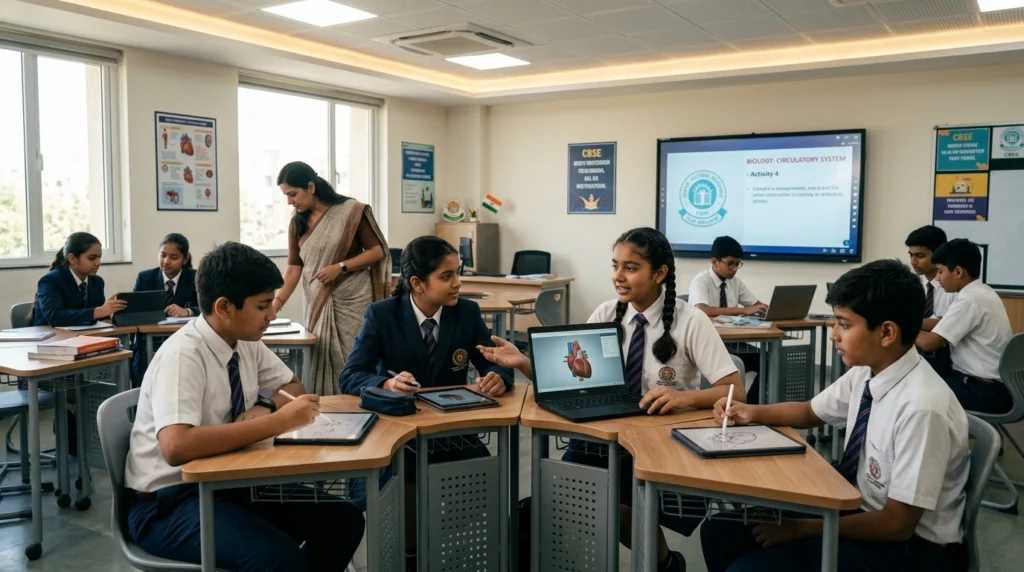
Not all screen time is harmful. Educational videos, learning apps, virtual experiments, and interactive activities can support learning when used appropriately.
Choose content that:
Parents should monitor the quality of content children watch online.
Designating certain areas and times as screen-free helps families spend quality time together.
Examples include:
These habits improve communication and strengthen family relationships.


Children need regular physical movement for healthy growth and development. Outdoor games, sports, cycling, and recreational activities help reduce dependence on screens.
Physical activities support:
Balancing screen time with active play is essential for overall well-being.
Using screens late at night can disturb sleep patterns. The blue light from mobile phones, tablets, and televisions may affect the quality of sleep.
To promote healthy sleep:
Good sleep is important for learning, memory, and emotional health.
Children should learn how to use technology responsibly and safely.
Parents and schools can guide students about:
Digital awareness helps children become responsible technology users.
Children often imitate adult behaviour. Parents can set a positive example by practicing balanced screen habits themselves.
Simple actions such as:
encourage children to develop healthier routines.
Spending time together through non-digital activities helps reduce unnecessary screen dependence.
Families can enjoy:
Such experiences improve emotional bonding and creativity.
Technology is an important part of modern education and communication, but maintaining healthy screen time habits is essential for a child’s overall development. A balanced approach that combines learning, physical activity, family interaction, and responsible digital use helps children grow into healthy and confident individuals.
By guiding children with proper routines and positive habits, parents and schools can ensure that technology becomes a useful learning tool rather than a distraction.