Natham, Dindigul, Tamil Nadu - 624 401
+91 84890 34490, +91 84890 34491
kvmschooln25@gmail.com

Good nutrition plays a vital role in the healthy growth and development of children. School- going children need balanced and nutritious food to support their physical health, brain development, energy levels, and academic performance. Healthy eating habits developed during childhood often continue throughout life.
A proper diet helps children stay active, focused, and emotionally balanced both at school and at home.
Children require a balanced diet that includes:
A nutritious diet supports:
Breakfast is one of the most important meals for children. A healthy breakfast provides energy and helps students stay attentive during school hours.
Nutritious breakfast options include:
Skipping breakfast may lead to tiredness, poor concentration, and reduced classroom performance.
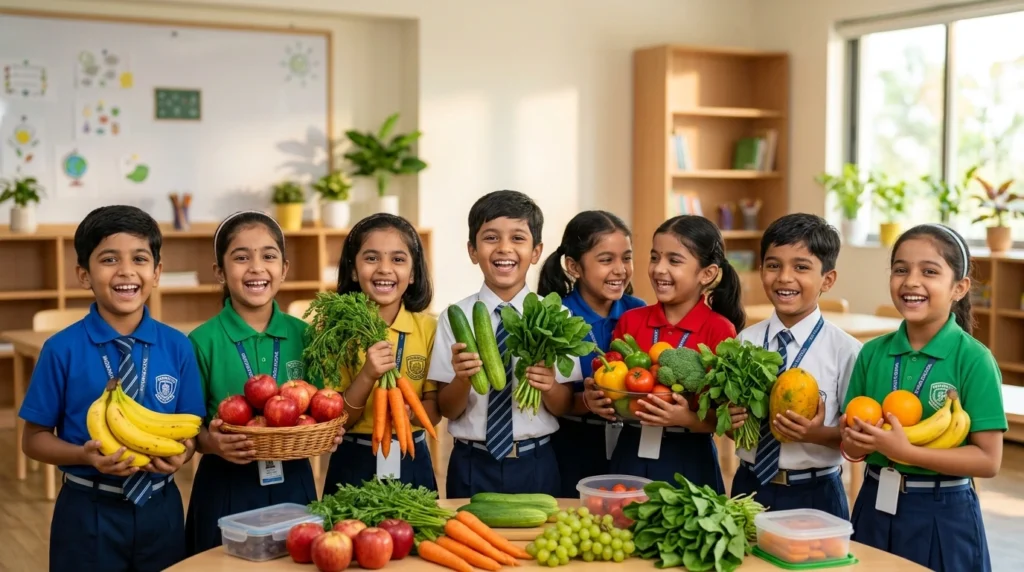
Fruits and vegetables are rich in vitamins, minerals, and antioxidants that strengthen immunity and support healthy growth.
Parents should encourage children to eat:
Colorful fruits and vegetables make meals healthier and more attractive for children.
Proteins are essential for muscle development, tissue repair, and overall growth.
Healthy protein sources include:
Including protein in daily meals helps children stay energetic and active.


Proper hydration is important for maintaining energy and concentration levels. Children should drink enough water throughout the day, especially during school and outdoor activities.
Encourage:
Limit sugary soft drinks and packaged beverages.
Children often prefer snacks between meals. Healthy snack choices can provide energy without excessive sugar or unhealthy fats.
Healthy snacks include:
Avoid frequent consumption of:
Occasional treats are acceptable, but regular consumption of junk food may affect children’s health and energy levels.
Excess junk food can lead to:
Balanced home-cooked meals are usually healthier and more nutritious.
Consistent meal schedules help children develop healthy eating routines and proper digestion.
Children should have:
Avoid long gaps between meals.
Parents and schools can help children build lifelong healthy habits by:
Positive eating habits influence both physical and emotional health.
Healthy eating directly affects a child’s ability to learn and perform well in school.
Proper nutrition supports:
Well-nourished children are often more attentive, confident, and physically active.
Nutrition is an important foundation for a child’s growth, learning, and overall well-being. Balanced meals, healthy snacks, regular hydration, and proper eating habits help children stay healthy, active, and focused. Parents and schools play a key role in guiding children toward nutritious food choices and
healthy lifestyles. Encouraging good nutrition from an early age supports both academic success and lifelong wellness.