Natham, Dindigul, Tamil Nadu - 624 401
+91 84890 34490, +91 84890 34491
kvmschooln25@gmail.com

Sports and physical education play an essential role in the overall development of children. While academic learning builds knowledge and intellectual abilities, physical activities help students develop fitness, confidence, discipline, teamwork, and emotional well-being. A balanced education includes both classroom learning and active participation in sports. In today’s fast-paced digital world, encouraging children to stay physically active is more important than ever.
Regular participation in sports helps children maintain good physical health.
Physical activities improve:
Active children are more likely to develop healthy lifestyle habits that continue into adulthood.
Sports are not only beneficial for the body but also for the mind. Physical activities help reduce stress, anxiety, and mental fatigue. Students who participate in sports often feel more energetic, focused, and emotionally balanced.
Exercise releases positive hormones that improve mood and mental health, helping children stay motivated and confident.
Sports teach children the importance of:
These qualities help students become more disciplined in both academics and daily life.
Team sports help children learn how to work together, communicate effectively, and support others.
Students understand the value of cooperation and mutual respect.
Sports also provide opportunities for leadership development by encouraging students to:
Such experiences build strong interpersonal skills.

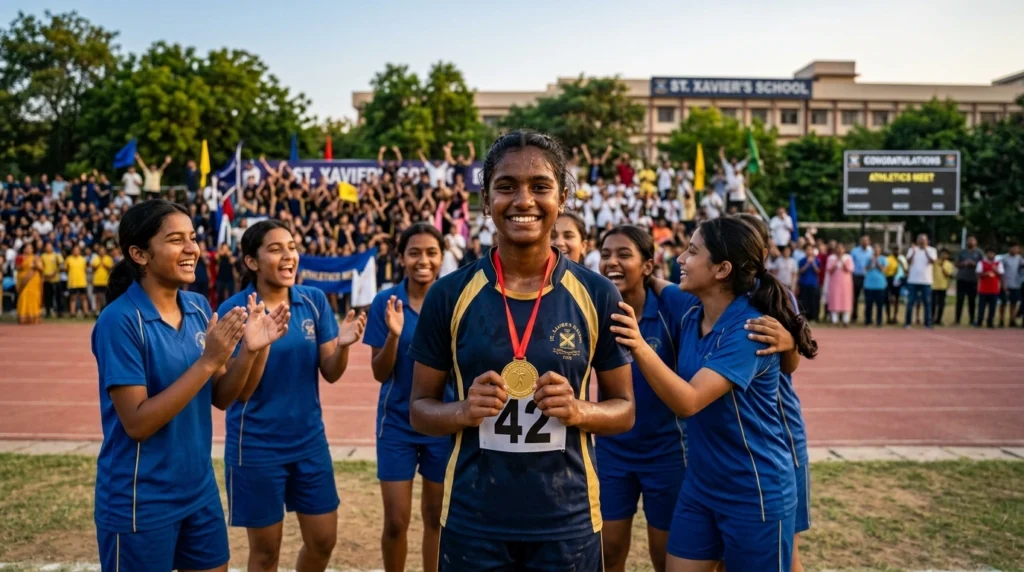
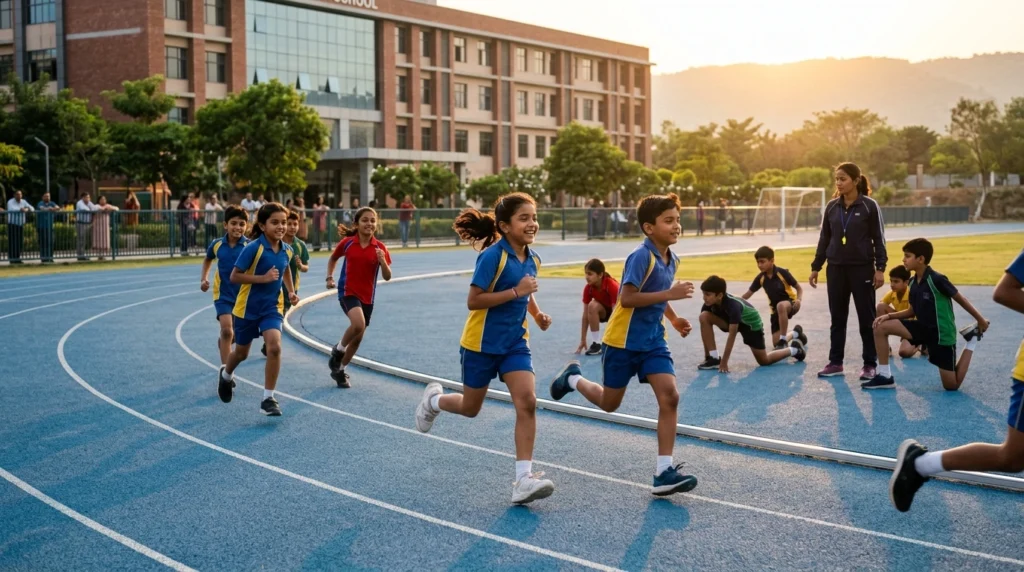
Participation in sports helps students overcome fear and build self-confidence. Achieving goals, improving performance, and participating in competitions give children a sense of accomplishment.
Even learning from failures and setbacks teaches resilience and determination.
Regular physical activity can positively influence academic performance.
Active students often show:
Physical education supports brain development and helps students stay attentive during learning activities.
Introducing sports at an early age encourages children to adopt healthy routines such as:
These habits contribute to long-term physical and emotional well-being.
Sports provide opportunities for students to interact with peers, make friends, and develop social confidence.
Through games and competitions, children learn:
These values are important for personal and social growth.
Physical education in schools ensures that every child gets the opportunity to stay active and develop essential life skills. Schools that encourage sports create a healthy and energetic learning environment.
A well-rounded school education includes:
Such programs support holistic student development.
Sports teach valuable life lessons that extend beyond the playground. Children learn how to:
These lessons help students become confident, responsible, and resilient individuals.
Sports and physical education are vital components of a child’s education and personality development.
They contribute to physical fitness, mental well-being, teamwork, discipline, leadership, and confidence.
Schools and parents must work together to encourage children to participate actively in sports and physical activities.
A healthy balance between academics and physical education helps students grow into strong, capable, and well-rounded individuals prepared for the future.